
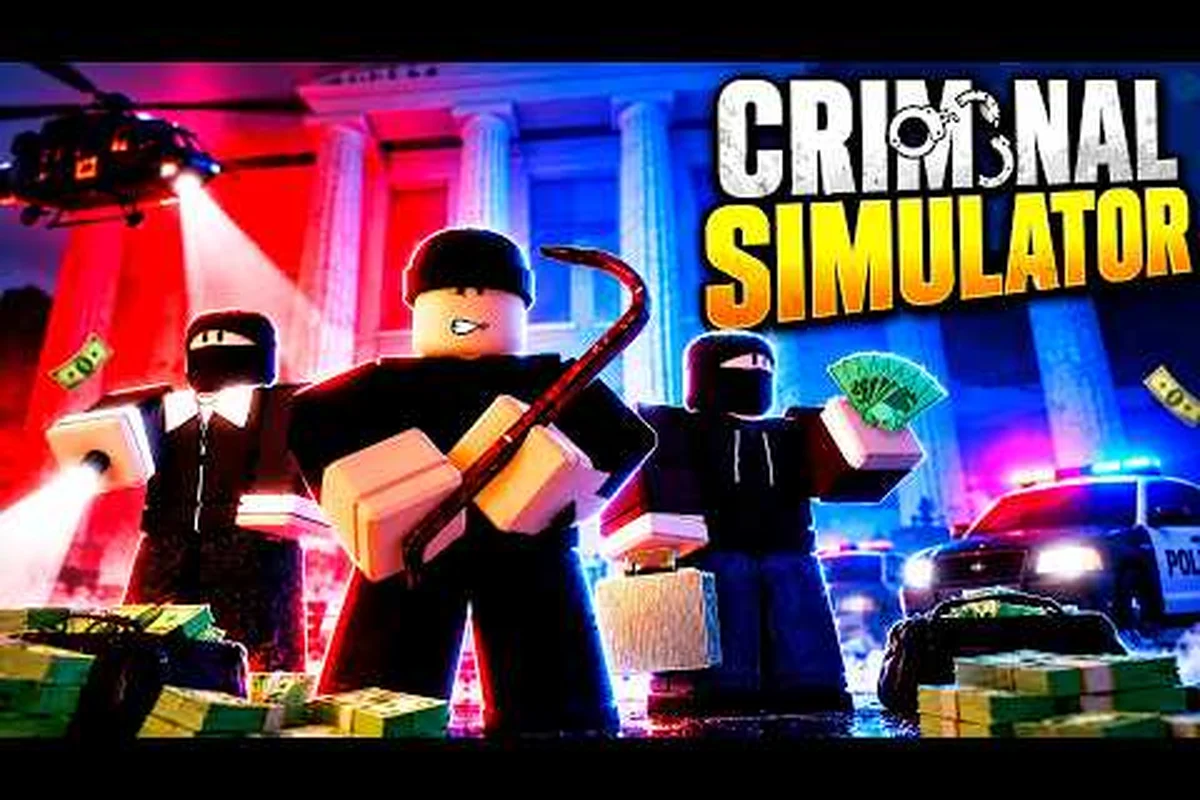
Hiding from police in a criminal simulator is about managing the pursuit state, not merely sprinting away. A police patrol AI can spot movement, react to sound, and close distance while a dog unit tracks scent; breaking line of sight helps, but abrupt sprinting may make you easier to identify. Better options include observing patrol routes, slipping through sightlines during a patrol turn, using environmental distractions to mask footsteps, and changing direction before the police AI commits to a chase. A clean escape therefore depends on patrol timing, sound cues, and the dog unit’s scent tracking rather than raw running speed alone.
Understanding Criminal Simulator Hiding Mechanics
The best escape begins before an officer has clearly spotted you. Criminal Simulator hiding mechanics reward players who watch patrol routes, reduce their visibility, and move between cover instead of sprinting through predictable streets. The official Criminal Simulator on Roblox page describes a night-oriented heist loop in which players rob the city, avoid residents and police, and handle K9 units before the deadline.
That official description establishes the basic danger, but community observation supplies the practical details: officers react to visible movement, sound, and nearby crimes, while hiding becomes safer when your character is no longer easy to distinguish. A character who freezes behind a suitable obstacle may avoid becoming a target, although this should not be treated as a permanent safe state if the patrol reaches the hiding location.
The Four Signals That Expose a Suspect
Most failed escapes begin when a player focuses on distance and ignores the signals bringing police toward the character. Understanding these signals separates deliberate stealth from accidental waiting. In practice, a police patrol may turn toward the suspect before the player has been clearly identified, while a dog can react to a scent trail without any visual contact. Moving behind a wall, vehicle, or other hard cover can break the officer’s sightline, whereas crossing open ground may expose the character’s position to multiple nearby patrols. The key is to track pursuit signals as they develop, not merely to run until the alert disappears.
| Pursuit signal | What it indicates | Better response |
|---|---|---|
| Officer turns toward the suspect | The character may have entered the officer's sightline | Break the angle immediately with walls or vehicles |
| Officer moves despite no visible suspect | Sound or another crime may have redirected the patrol | Change route and avoid nearby crimes |
| Dog raises its head | A scent trail may be active | Increase distance, cut across open ground, and change surfaces |
| Nearby officers converge | The alert has become a coordinated response | Use a separate escape route instead of the original approach |
The table is not a promise that every signal behaves identically. Behavior can vary by version, map position, crew activity, and whether the player is carrying loot. As of October 31, 2026, the official page lists the game as an alpha release, so players should treat unverified community observations as practical guidance rather than permanent rules.
Immediate Actions When Spotted
If an officer already sees you, the first priority is to stop presenting a clean, continuous target. Move laterally across the patrol's field of view rather than running directly away, because a direct retreat can leave you visible for longer. Look for a hard visual break such as a building corner, solid wall, container, or parked vehicle.
If no clean break exists, create distance first and search for cover afterward. Crossing open ground is risky, but remaining near the officer gives the pursuit system more opportunities to close the gap. The criminal simulator police chase tips that matter most are situational: use walls to interrupt tracking, use distance to reduce immediate pressure, and avoid doubling back near the officer's likely destination.
Understanding how the police chase AI develops can clarify why escape timing matters: if you break line of sight but remain within the patrol’s likely search area, officers may still investigate your last known position. Disappear around a corner, move to a different street, and use nearby cover or police dog unit distractions to reduce the chance of being reacquired. For a broader explanation of pursuit development and escape timing, see police chase tactics for Criminal Simulator.
Reading the Police Patrol and Breaking Sightlines
A successful escape depends on predicting where police will look next. Criminal simulator police patrol behavior is easier to exploit when the player identifies a route's origin, direction of travel, and likely destination. Simply watching one officer is not enough because a nearby patrol may hear the same disturbance and approach from another angle.
Map Patrols as Connected Decision Points
Think of the city as a series of connected decision points rather than a flat collection of streets. At each corner, alley, plaza, or parked-vehicle gap, ask three questions: Can an officer see both sides? Does the route create a natural shortcut back to the pursuit? Will the next surface make noise differently?
| Patrol situation | Risk | Effective maneuver |
|---|---|---|
| Officer approaching head-on | Low reaction time | Turn behind nearby hard cover before the gap closes |
| Officer following the same street | Predictable pursuit path | Cross a side street and keep moving perpendicular |
| Officer checking a fixed point | Temporary sightline blockage | Wait until the patrol passes, then relocate laterally |
| Multiple patrol zones overlapping | High chance of renewed contact | Move outside the overlap rather than repeatedly changing cover inside it |
| Scent trail left behind | Dog can recover direction | Route across varied surfaces and avoid doubling back |
This decision-point model makes line-of-sight breaks more useful than a random hide-and-wait tactic. A hiding place only works if it prevents the officer from seeing your character, blocking the dog's trail, and offering another exit before the search converges. Cover beside the patrol's intended route can work better than cover directly in front of it because the officer may pass without stopping.
Use Distance, Noise, and Position Together
Three factors determine whether a hiding attempt feels clean: search distance, sound exposure, and position quality. Distance gives you time to observe, sound decides whether an officer investigates, and position determines whether the patrol can reacquire you. Improving only one factor often produces a brittle escape.
Community guides such as the Criminal Simulator tips video by NoobBlox provide a broader look at progression and useful play patterns. Their recommendations should be treated as player experience because they are not official mechanic documentation. For this guide, the relevant takeaway is that a methodical route can preserve more options than a reckless sprint.
To understand how patrols begin, how alerts develop, and how police behavior differs from a direct chase, consult the Criminal Simulator police behavior overview. It is especially useful for distinguishing routine patrol checks from reactive searches: officers may investigate a noise without seeing you, while a confirmed sighting usually starts a chase and lets the police AI close distance. The overview also explains how disguising your role and keeping an escape route can turn a pursuit into a search, giving you more control over the encounter.
Evading Police AI During a Chase
Once the pursuit starts, the player's decision-making becomes reactive, but the best criminal simulator evading police ai strategy is still positional. A chase succeeds when the player keeps choice alive: multiple exits, open routes, and enough separation to determine whether officers or dogs are tracking the character.
Choose the Escape Route Before the Corner
Do not wait until an officer rounds a corner to decide where to go. Scan two routes ahead. One should offer immediate cover, while the other should provide distance from the patrol zone. Running toward distant cover can waste valuable seconds if the officer remains close; running toward nearby cover can cause a dead end if another officer appears.
| Route quality | Signs | Decision |
|---|---|---|
| Strong | Two exits, hard cover, no obvious patrol crossing | Enter and reassess from a protected position |
| Moderate | One exit and limited cover | Use only briefly, then seek a second break |
| Weak | Dead end, open plaza, one known patrol route | Avoid unless it is the only immediate option |
| Exposed | Long straight stretch with several sightlines | Cross only when necessary and maximize lateral movement |
The official game page supports crews of one to four players, which means a teammate may provide a distraction or open route. However, a distraction should pull attention away from the escape corridor rather than toward the planned hiding spot. If every officer sees the same decoy, the group has merely changed the pursuit angle rather than escaped it.
Break Contact in Layers
Use three layers when trying to escape: create a visual break to remove the nearest officer’s line of sight, a tracking break to invalidate the route the police AI is following, and an opportunity break to confirm that neither officers nor police dog units have reacquired your trail. For example, cut through a service alley and emerge on a parallel street rather than doubling back; the officers may continue toward your last visible position while a dog unit tests the previous scent trail. This layered check is more reliable than sprinting until stamina disappears, because each layer addresses a different pursuit cue: sight, movement history, and scent. If the police patrol still follows the same route or the dog remains locked onto the trail, you have not fully broken contact and should keep moving before approaching your destination.
-
Visual break: Place a solid obstacle between you and the nearest officer.
-
Tracking break: Change direction, cross another route, or move through a different patrol zone so the pursuit cannot simply follow your previous path.
-
Opportunity break: Put enough distance between the chase and your destination to observe whether officers or dogs have reacquired the trail.
This method is more reliable than sprinting until stamina disappears. If a player cannot explain why the pursuit lost track, they probably have not fully broken contact. An officer may still be following the last visible location, while a dog may be following the last scent.
For additional details about escalation, spawn behavior, and the night cycle, see Criminal Simulator gameplay mechanics. Understanding these systems can reveal why a hiding spot fails: police spawns may add an officer to the pursuit, the night cycle can reduce visibility and alter patrol coverage, and escalation can increase pressure after repeated evasions. Use the mechanics reference to connect those changes with visual breaks, tracking breaks, and scent-based opportunities so your escape plan adapts to the current chase rather than relying on one fixed route.
Escaping Police Dog Units
Dogs create a different problem from foot patrols. Officers can react to what they observe, but a dog may continue working from a scent trail after the player has broken line of sight. Criminal simulator police dog units therefore require an escape plan that changes routes, not merely one that hides behind a wall.
Read the Dog's Working State
Dogs may pause, sniff, move with a patrol, or follow a trail, but exact animation cues can change as the alpha develops. Treat these states as practical categories rather than fixed labels. A dog that stops and lowers its attention may be checking a scent, while a dog moving steadily in one direction may be following an established trail.
| Dog behavior | Likely meaning | Best response |
|---|---|---|
| Stops and sniffs | Checking or redirecting | Create a new scent trail away from the pursuit |
| Follows the same direction | Working a trail | Cross the route at a different angle |
| Moves with an officer | Supporting an active patrol | Create separation before attempting to hide |
| Circles near cover | Searching the area | Do not remain at the same hiding point |
| Returns toward the last route | Reacquiring the trail | Keep moving through varied terrain and hard cover |
Do Not Assume a Wall Ends a Scent Trail
A wall blocks sight, not necessarily scent. If the dog reaches the same passage you used, waiting beside that wall may only delay detection. Choose a route that leaves the original path, use multiple corners, and avoid repeatedly crossing the same ground.
Scent interruption is the highest-value goal during a dog pursuit. A sudden direction change can produce a confusing scent cluster, while a long crossing through another patrol zone can separate the dog's working area from the officer's. Players should avoid sprinting in predictable circles, because repeated loops make scent and visual clues reinforce one another.
Crew Tactics for Dog Encounters
In a crew, assign one role to the person carrying loot and another to monitor the dog. If possible, draw the dog toward a side route while the carrier moves toward a different objective. The decoy does not need to become a hero; it only needs to interrupt the trail for a few seconds.
| Crew situation | Role split | Goal |
|---|---|---|
| Dog near the carrier | Monitor holds attention elsewhere | Give carrier a clean crossing |
| Dog blocks the exit | One player creates noise or movement | Move the squad through the secondary exit |
| Officers and dog are together | Avoid splitting the pursuit | Create one clean break before separating |
| Carrier is caught | Protect remaining loot route | Prevent the dog from locking onto the teammate |
Because this is an alpha game, current community reports should be retested after updates. If a mechanic changes, the same route may become less effective. The official game page's October 29, 2026 update information confirms that the experience was still receiving page-level changes during the period covered by this guide.
Practical Police Chase Tips for Clean Getaways
The strongest escapes use a simple cycle: observe, disrupt, relocate, and verify. Observation identifies the threat through the police patrol’s sight cone and the police AI’s likely approach; disruption breaks its current advantage by breaking line of sight or using obstacles to trigger a search state. Relocation creates a new route away from the last known position, while verification confirms whether the pursuit has ended. This matters especially when police dog units are active: changing direction after a dog begins tracking can prevent the search radius from closing around your hiding spot.
The Four-Step Escape Cycle
-
Observe: Identify the nearest officer, possible second patrol, dog location, and available exits.
-
Disrupt: Break sight with cover, change direction sharply, or move across a patrol's search zone.
-
Relocate: Head toward cover that is not beside the original route or likely search point.
-
Verify: Pause only after losing the pursuit, then watch for an officer returning or a dog redirecting toward the trail.
| Situation | Immediate action | Long-term correction |
|---|---|---|
| Officer has direct sight | Break the angle with hard cover | Leave the exposed street for a parallel route |
| Officer only investigates sound | Move away while attention is fixed | Do not steal back the same patrol's route |
| Dog is tracking a scent | Alter direction and crossing pattern | Reach a route with different surfaces and turns |
| More than one officer responds | Avoid predictable escape lanes | Create distance before selecting cover |
| Pursuit appears finished | Wait through one full patrol cycle | Resume movement if any patrol returns |
Mistakes That Make Hiding Worse
Running between two nearby hiding spots is a common error because it increases exposure without improving the scent trail. Likewise, hiding directly under an officer's patrol route can work briefly but offers poor timing. Another frequent mistake is switching equipment or fighting during an active pursuit; it may increase noise and keep the character visible.
No-commitment movement is another poor strategy. The player keeps running without choosing a destination, which consumes stamina, leaks clues through footprints and visual detection, and lets the police patrol narrow the search area. Pick one strong hiding position rather than testing every doorway along the route; for example, choose an enclosed spot outside the patrol’s direct line of sight, confirm the scent trail has faded, and wait for the patrol AI to pass before making another move.
For more examples of failing chases and how players can diagnose them, the Criminal Simulator night patrol guide offers a useful next step. Its focus on nighttime patrol scenarios fits closely with the official game's night-heist structure.
Advanced Hiding Routes and Escape Planning
Strong players treat hiding as a route-planning problem. The objective is not to remain unseen for a few seconds; it is to avoid being reacquired after every interruption. Criminal simulator hiding from police becomes manageable when the player reserves a second layer of cover and knows what happens if the first one fails.
Build a Two-Stage Escape Plan
A two-stage plan has an immediate action and a fallback. If the immediate action works, the player reaches a stable observation point. If it fails, the fallback reaches a different patrol zone rather than ending in the same dead end.
| Threat during the attempt | Immediate action | Fallback |
|---|---|---|
| Officer gains direct sight | Move laterally behind solid cover | Cross a side route beyond the officer's angle |
| Dog follows the scent | Change direction and surface | Continue toward a separate patrol zone |
| Backup officer arrives | Use distance rather than another close hide | Cross an exposed route only when the gap is safe |
| Hiding place is searched | Leave before contact | Use the second exit and reassess elsewhere |
Map the Noise Trade
Noise can be useful when it creates a believable alternative focus, but it can also expose the entire route. Before changing direction, consider whether another offense or player movement could explain the sound. If not, a sharp turn may make the pursuit more suspicious.
The pursuit system is easier to read when you separate what officers know from what they assume. An officer who reaches the right street may only be searching the last reported area. A dog on a scent may not know the exact hiding place. Conversely, direct visual contact provides much stronger information, so breaking sight quickly matters more than outrunning an officer who has already lost the trail.
Account for the Alpha Version
The official page identifies Criminal Simulator as an alpha night-heist experience. It had accumulated more than 5.4 million visits, 92,500 favorites, and roughly 24,800 concurrent players by late October 2026, making it active enough for community behavior to vary. Those figures also mean that player reports can differ because squads, maps, updates, and active neighborhoods may create different pressure.
Avoid treating one route as unbeatable. Test the same hiding plan under different patrol conditions, note whether dogs interrupt it, and keep a backup for the moment a developer update changes detection timing. The official Criminal Simulator game page remains the best place to confirm the current release state before relying on an old sequence.
Frequently Asked Questions
What is the fastest way to hide from police in Criminal Simulator?
Move out of the officer's direct sightline, place a solid wall or vehicle between yourself and the patrol, then relocate before officers converge. Staying in one nearby hiding spot is risky because a second officer or dog may arrive. A second exit matters more than a distant location when the first patrol is close.
Does breaking line of sight guarantee that the police lose you?
No. Breaking sight stops immediate visual tracking, but officers may inspect your last known location, and a dog may continue following a scent. Relocate along a new route, cross the trail at another angle, and pause only after confirming that neither unit is returning. The official game page does not publish a guaranteed detection timer.
How do police dogs follow a suspect in Criminal Simulator?
Dog behavior may appear to follow a scent trail even after the suspect breaks visual contact. Change direction, cross the original path, and avoid looping through the same territory. Exact cues can vary in this alpha release, so watch for the dog stopping to sniff or repeatedly selecting the same route before trying a new escape plan.
Should a player hide inside the same building after a chase?
Not automatically. The correct building depends on patrol access, sightlines, exits, and whether the dog can approach the same scent line. Choose a position with at least two exits and a solid visual break. If the first location is already being searched, move deeper into a different patrol zone rather than changing cover inside the same trap.
Is running directly away from an officer the best escape strategy?
Direct retreat can work when it creates meaningful distance, but it often leaves the character visible along a predictable path. Running diagonally across the officer's field of view can shorten exposure, while a hard obstacle can break tracking altogether. Choose the route that creates both distance and a new angle, especially when a dog is also active.