
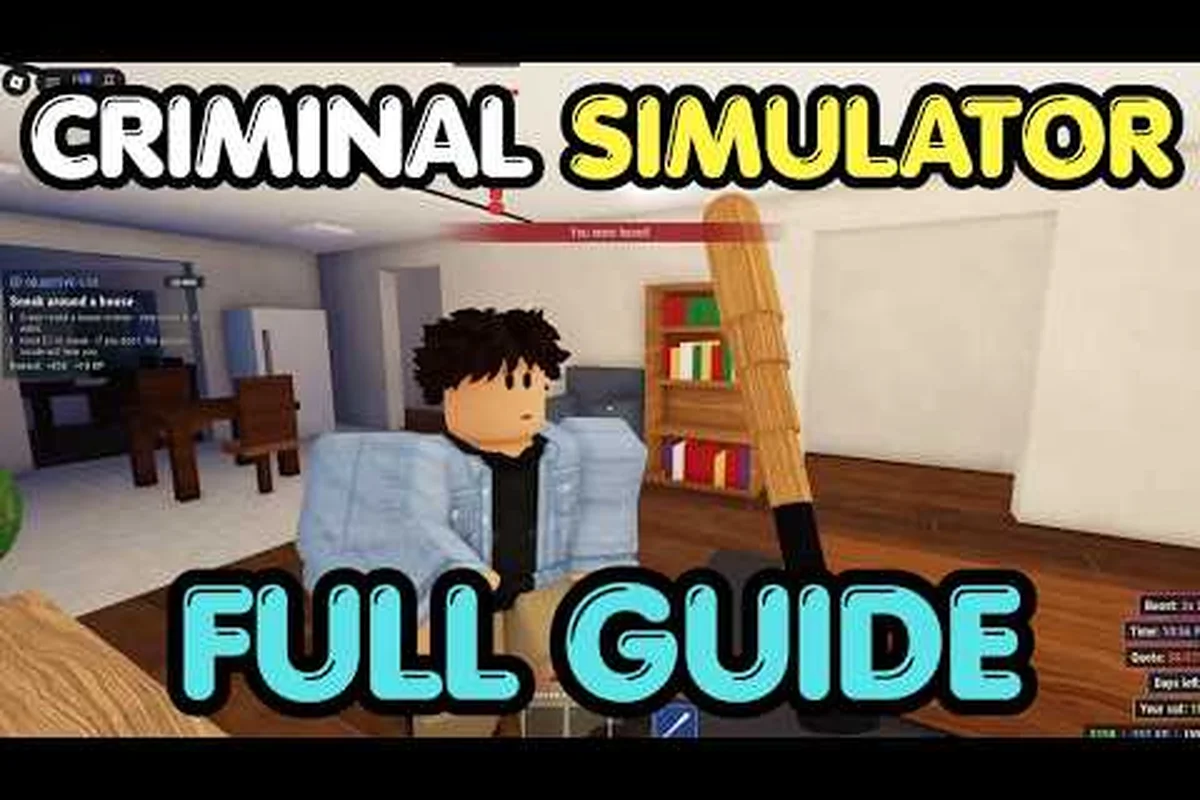
A criminal simulator beginner guide should teach you how to read the interface, assign crew roles, protect cash, and prioritize a clean getaway rather than simply grabbing the first target. For example, solo players can focus on one route and quick sales, while a four-player crew should divide entry, getaway, and loot-handling duties so police attention does not stall every teammate. Mastering those roles, the cash loop, and first-night priorities creates a repeatable routine before the deadline and K9 patrols make every robbery more dangerous.
Criminal Simulator is an alpha night-heist experience on Roblox from Pigged Out Studios. Its official Criminal Simulator game page describes crews of one to four players moving through a city, avoiding residents, escaping police and K9 dogs, and selling stolen goods before a deadline. Because the game centers on moving quickly while several systems compete for your attention, learning the interface and planning a clean route can matter more than rushing every available target.
Criminal Simulator Basics and Core Controls
The first step in any criminal simulator getting started plan is to understand what your character can do and what each objective asks you to do. The basic loop is straightforward: enter a property, collect valuables, avoid detection, leave the area, and get the loot to a seller before the night ends. Every extra action should support one of those stages, because wandering without a purpose usually leaves you vulnerable when police or residents move into the area.
Basic movement and interaction
Use the standard Roblox movement controls to travel. Character movement, sprinting, jumping, and crouching generally follow the platform’s familiar layout, while nearby objects and mission prompts provide contextual actions. Read the prompt before pressing an interaction button, especially when looting containers, opening doors, or entering a marked exit. Confusing a pickup with an interactable obstacle can cost valuable time.
The most useful early skill is stopping before the edge of danger. Criminal Simulator adds active threats rather than making every mistake instantly fatal, so a controlled pause can prevent a chase that would drain your time and loot value. Continue moving between safe pockets, but do not sprint through every street or room as though speed alone solves the encounter.
Your first objective checklist
Use this sequence when you enter the game for the first time: check the current objective, walk into the starting area, and approach nearby doors, valuables, and exits until their interaction prompts appear. Complete one pickup and one exit action before attempting a larger robbery; this gives you time to learn contextual interaction, carried-loot limits, seller access, and the risk of resident or police alerts while keeping the first objective manageable.
-
Read the current objective and locate its marker.
-
Walk close enough to doors, valuables, and exits to reveal their prompts.
-
Loot only what you can carry comfortably and sell without delays.
-
Watch for residents, police indicators, and K9 dogs.
-
Leave the robbery zone before pursuing extra loot.
-
Reach a seller and confirm the sale before attempting another target.
| Early objective | Why it matters | Beginner action |
|---|---|---|
| Reach the starting area | Confirms where the current phase begins | Look for a marker and follow it once |
| Learn an interaction prompt | Prevents accidental or missed actions | Stand near the object before pressing the action |
| Collect at least one item | Tests the loot interface | Check the inventory or carried-loot display |
| Reach an exit | Prepares you for the escape phase | Learn the exit before the route becomes crowded |
| Sell the loot | Converts risk into cash | Visit a marked seller after the robbery |
Contextual interaction is the foundation of the early game because doors, loot, sellers, and objectives may all use nearby prompts. Once the prompt appears, keep the character stationary long enough to complete the action; otherwise, you may continue walking away with the pickup half-finished.
Learn the three-stage robbery rhythm
A clean robbery generally has three stages: preparation, collection, and extraction. During preparation, identify the target and mark a plausible exit. During collection, take useful valuables while checking the threat level. During extraction, stop taking risks and move toward safety.
| Stage | Primary goal | Common mistake |
|---|---|---|
| Preparation | Confirm the target, route, and exit | Enter without checking the marked area |
| Collection | Acquire a practical amount of loot | Greedily emptying every container |
| Extraction | Reach safety and the seller | Returning inside for one extra item |
This rhythm is particularly useful in the criminal simulator roblox guide context because the game is still in alpha. Interface prompts, difficulty tuning, and rewards may change as development continues, but a clear objective hierarchy remains useful even when exact numbers shift.
Crew Roles and Team Responsibilities
Crew play is not merely an extra option; it changes how a robbery is divided. Criminal Simulator supports one to four players per crew, and a useful team is one where members have different responsibilities rather than four players crowding the same doorway. Assign roles by objective, establish a meeting point, and decide what happens when someone separates from the group.
Choosing a crew structure
The strongest early arrangement is a small scout-and-carry plan. One player checks the route and alerts the others, while the second gathers the first group of valuables. If the group has four members, two players can handle collection and the remaining players can watch movement or collect in a second area. Exact role names may vary, so treat these duties as responsibilities rather than fixed unlockable classes.
| Crew size | Practical role split | Main advantage |
|---|---|---|
| 1 player | Scout, collector, and extractor | Full control over route and timing |
| 2 players | Route scout and loot carrier | One player can watch while the other moves |
| 3 players | Scout, collector, and lookout | Better coverage without excessive movement |
| 4 players | Two collectors and two mobile support players | Fast collection with clearer warning system |
Route scouting should come first because the group must know where it is entering, where it is leaving, and where it will regroup. A second player can collect while the scout watches for police or residents, which prevents every member from reacting to the same threat at once.
Communication that saves time
Use short, specific calls instead of repeatedly reporting every visible detail. “Police behind,” “door here,” and “meet at exit” give teammates actionable information. If the crew enters separate buildings, choose a recognizable meeting point nearby rather than relying on the game’s minimap alone, since a marker can be hard to interpret in a busy street.
The Criminal Simulator play with friends guide provides additional context on organizing a four-person crew, sharing loot, and coordinating a shared route. Its role-planning approach works well with this guide because beginners can test one simple responsibility per player instead of creating a complicated operation immediately.
Loot ownership and selling
Decide whether the crew shares cash equally or reinvests it in a shared fund. Equal splitting is simple and discourages arguments, while a shared fund can support upgrades for the team as a whole. The important rule is to make the choice before selling valuable loot and to confirm that every teammate understands it.
Players who often rob alone can compare this crew system with the solo debt guide. The same basic priorities apply in either setting: secure the sale first, understand what debt requires, and avoid treating uncollected cash as income. A successful robbery without a completed sale is not finished work.
Cash, Loot, and Early Progression
Cash is the result of successfully completing the robbery loop, not simply finding valuables. New players often focus on the size of their haul while ignoring the deadline, route home, or price of temporary tools. A criminal simulator new player guide should therefore help you balance worthwhile loot with a dependable escape route.
Value is more than inventory size
The supplied information does not establish fixed prices for every item, so do not treat any single number as universal. Valuables can vary by type, current objective, location, and game version. The safest approach is to compare the value of your inventory after each pickup, watch what the seller confirms, and learn which local items your crew consistently sells at a good rate.
| Loot decision | Immediate result | Long-term effect |
|---|---|---|
| Take a clearly marked item | Adds sellable cargo | Supports cash and debt progress |
| Take an uncertain item | May provide value or be less useful | Risks slowing the escape |
| Take several small items | Builds a modest total | Can still produce useful early cash |
| Delay one extra pickup | Preserves time | Often protects the entire sale |
| Abandon a pickup | Reduces carried value | Keeps the route faster and safer |
Sell confirmation matters because the game’s displayed totals and objective indicators provide the clearest evidence that a robbery has succeeded. After reaching the seller, wait for the sale to register, then check cash and remaining objectives before starting another run.
Where your first cash should go
Early spending should improve reliability rather than simply making you look impressive. Compare available upgrades with the situations in which you lose time or lose loot. A route tool, faster movement option, or basic protection can create more value across several runs than one expensive item used for a single robbery.
Use a three-part spending test: first, compare an upgrade’s cost with how often it appears during a typical Criminal Simulator run; second, check whether it improves travel speed, loot capacity, or survivability when a robbery goes wrong; and third, ask whether you can understand and use it immediately. For example, if you repeatedly lose time escaping a crowded store, a movement upgrade may produce more value than a cosmetic item, while a larger backpack is only useful if you can still extract the haul safely.
-
Does it reduce a repeated problem? Prioritize items that fix frequent slowdowns.
-
Does it preserve future earnings? Favor improvements that protect time, loot, or successful sales.
-
Can you use it immediately? A simple upgrade is usually better than a complex option you do not understand.
| Early purchase type | Best use | Reason to buy |
|---|---|---|
| Movement or time improvement | Faster travel and extraction | Helps complete more objectives per night |
| Basic protection | Surviving detection | Reduces the chance of losing everything |
| Loot-capacity improvement | Carrying a fuller haul | Useful only if you can still escape quickly |
| Cosmetic item | Character appearance | No direct effect on robbery efficiency |
Do not spend your entire starting balance without testing the game’s systems. Keep a small reserve so you can continue earning after an unsuccessful attempt. The community’s money and upgrade guide can provide additional tips, but it should be treated as a player-produced resource rather than an official rules source.
Learn the economy through repeated small runs
A controlled first robbery is more valuable than an ambitious one that ends in a chase. Start with one target, collect a modest haul, and complete the sale. Repeat that route until you understand the travel time and threat pattern. Once the routine becomes stable, improve the load or add another target.
Community reports often emphasize earning cash quickly, but speed without a successful extraction can be counterproductive. Your personal best method is the route that produces repeatable profit after mistakes. Use the video by NoobBlox on YouTube as a community perspective on money-making approaches, then validate each suggestion against your own results.
First-Night Strategy and Safe Decision-Making
Your first night is a learning session. The official game page describes the central challenge as robbing the city at night while sneaking past residents and escaping police and K9 dogs. That means your route, awareness, and extraction timing matter as much as the loot you find. The Criminal Simulator night survival guide expands on threat handling when you want a deeper look.
Build a repeatable route
A good first route has three properties: it is easy to understand, it contains a nearby exit, and it gives you a clear seller route afterward. Practice it during a quieter period if the game allows. Keep your path simple enough that you can recognize landmarks without constantly checking the interface.
Plan backward from the seller. Decide what must be collected, how long collection should take, and which street provides the safest return. This prevents the common mistake of filling the inventory deep inside the city with no practical route out. It also makes crew communication easier because everyone shares the same endpoint.
Threat-response priorities
Residents, police, and K9 dogs can interrupt a robbery in different ways. Residents may expose suspicious behavior, police can pursue you, and dogs can close distance quickly. Treat all three as reasons to adjust your route, not as obstacles to defeat in a prolonged fight.
| Warning sign | Best response | Why it works |
|---|---|---|
| Resident notices unusual activity | Pause, change direction, create distance | Avoids immediate escalation |
| Police indicator appears | Leave the target area | Preserves loot and time |
| K9 dog closes in | Use corners and open routes, avoid tight dead ends | Reduces easy pursuit angles |
| Inventory becomes difficult to manage | Sell or lighten the load | Improves escape speed |
| Route timer becomes urgent | Skip optional loot and extract | Protects the completed sale |
Discretion beats confrontation when your goal is a beginner payout. Fighting, lingering, and searching every container can consume the margin you need to return before the deadline. The official game page confirms that selling before the deadline is central to the structure, making early extraction a practical skill rather than a cautious retreat.
Make better decisions under pressure
When uncertain, choose the action that protects the core payout. That means prioritizing a marked exit over one additional item and prioritizing a known street over a shortcut you have never tested. If the crew becomes separated, regroup at the agreed point rather than each player trying to finish independently.
A compact decision order works well: check immediate danger, confirm the escape route, then compare the loot’s value with the time and attention needed to convert it into cash. For example, if a shop job has a marked exit, leave an unconfirmed side job for another target; the regular sale gives a reliable payout, while an unfinished second target can expose the crew to police patrols, lockdowns, or a failed handoff.
-
Is there a clear threat near me?
-
Can I reach the exit without crossing another active area?
-
Is the extra loot worth the time and attention it requires?
-
Do I still have enough time to reach the seller?
-
If the answer is uncertain, leave.
The beginner mistakes checklist is especially useful at this stage because it can reveal habits such as over-looting, ignoring doors, or starting a second target before confirming the first sale. Avoiding those errors often produces more progress than hunting for a complicated trick.
Practice Drills and First-Night Checklist
You learn faster by isolating one mechanic at a time. Criminal Simulator combines movement, stealth, inventory management, deadlines, and teamwork, so a complete shift can feel chaotic if every element is new. Short drills let you recognize prompts and react without turning the first attempt into an expensive failure.
Run three low-risk drills
First, practice movement and interaction in one accessible area. Focus on reaching prompts, completing loot actions, and leaving through the marked exit. Next, test inventory management by collecting a small group of valuables and observing how the carried display changes. Finally, complete a sale and note the cash received.
| Drill | Target skill | Success condition |
|---|---|---|
| Prompt drill | Controls and interaction | Collect the objective item and activate the exit |
| Route drill | Navigation and escape | Reach the exit without stopping repeatedly |
| Loot drill | Inventory awareness | Carry a useful load without losing sight of the timer |
| Sale drill | Economy and completion | Confirm the transaction and updated cash |
| Crew drill | Roles and communication | Separate briefly and regroup successfully |
A repeatable drill builds muscle memory faster than repeatedly attempting the most difficult robbery. The community video by Blueburry on YouTube covers weapons, money, and upgrades as part of a broader player guide. Treat its advice as community experience, especially because the game is still in alpha and balance may change.
Your first-night checklist
Use this checklist before attempting another target: pause for a quick risk assessment by checking your wanted level, nearby resident and police activity, and whether your crew has a reliable exit. For example, if police are already searching the area and your inventory contains high-value loot, abandoning the job can preserve cash and reputation better than triggering a second confrontation. Treat this as a decision gate: when the route to a seller becomes uncertain or the payoff no longer justifies the heat, withdraw instead of attempting an improvised escape.
- I know the current objective.
- I have identified an exit.
- I can reach a seller.
- I understand which prompts loot items.
- I have chosen a crew role, if playing with others.
- I am watching for residents, police, and K9 dogs.
- I am willing to leave without optional loot.
- I have confirmed the sale before leaving the seller.
- I know which upgrade addresses my repeated problem.
- I have reviewed my mistakes from the previous attempt.
Adjust difficulty as you improve
Once you can finish a short robbery reliably, increase only one variable at a time. Add one extra item to the route, carry a slightly larger load, or introduce a more complex property. Changing the objective, the loot volume, and the crew arrangement simultaneously makes it difficult to identify what caused a failure.
A criminal simulator how to play mindset treats failure as route data. Note where the chase began, how long the approach took, and whether the group left before the pressure peaked. If most problems begin at the same point, shorten that part of the route. The quick-start tips guide offers additional habits for improving movement, cash flow, and decision-making.
| Progression stage | New challenge | Keep unchanged |
|---|---|---|
| First successful sale | Learn the full loop | Simple route and modest loot |
| Consistent solo runs | Improve travel efficiency | Reliable exit plan |
| First crew run | Divide responsibilities | Shared meeting point |
| Higher-value targets | Balance extra loot with time | Early extraction rule |
| Upgrade spending | Test practical improvements | Cash reserve |
Criminal Simulator Beginner Guide Summary
The fastest way to improve in Criminal Simulator is to make each part of the robbery repeatable. Learn the controls, recognize contextual prompts, collect a modest haul, avoid unnecessary pursuit, and confirm the sale before planning your next move. Cash follows completed extractions, not merely full inventories.
As your criminal simulator beginner guide, this guide gives you a complete first-night framework: one-person routing, crew responsibilities, early spending priorities, loot decisions, and practical drills. Keep your first operations modest, learn where the threats appear, and expand only after you can finish a robbery cleanly. That progression creates a stable base for every later debt payment, upgrade, and more ambitious crew run.
Frequently Asked Questions
Can beginners earn money in Criminal Simulator?
Yes. Beginners can earn money by finding valuables, escaping the robbery area, and completing a sale before the deadline. Start with one accessible target and a small load rather than chasing every item. Once you understand travel time, nearby exits, and threat patterns, repeat the route to build a dependable income.
Should a new Criminal Simulator player play with a crew?
A crew can be useful once you understand the basic loop, but playing alone makes it easier to learn controls, prompts, loot, and selling. If you join a crew, assign one player to scout, another to collect, and establish a meeting point. Clear responsibilities reduce confusion when residents, police, or dogs interrupt the robbery.
What should beginners buy first with their cash?
Prioritize an upgrade that solves a repeated problem, such as slow travel, difficulty escaping, or losing valuables during a chase. Cosmetic items do not improve your robbery efficiency, and expensive options can leave you without a cash reserve. Test a basic upgrade, repeat several successful runs, and then consider a larger purchase.
How do beginners avoid losing all their loot?
Leave the target area before the situation becomes a prolonged chase, and stop collecting optional valuables when time or danger increases. Know the marked exit, watch the surrounding streets, and sell the haul you already have. In a crew, call threats early so one player can continue moving while others prepare to regroup and extract.