
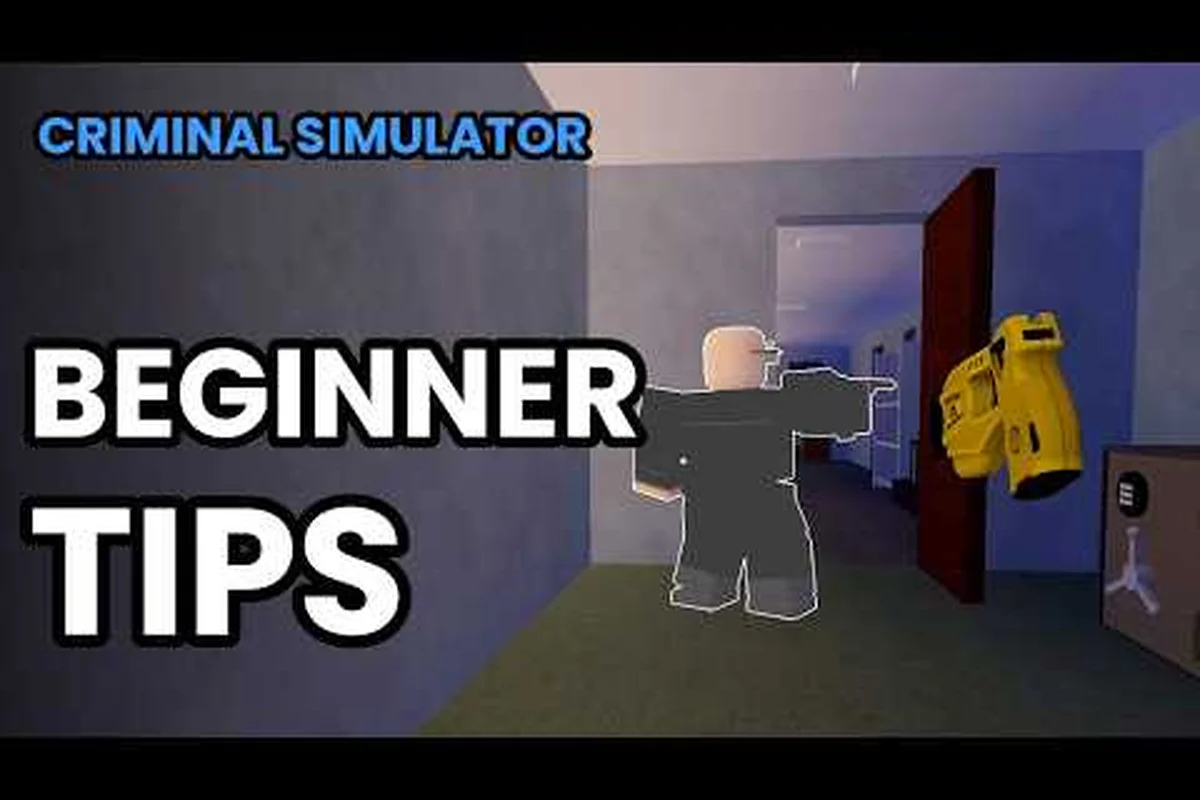
Your first night in Criminal Simulator decides whether you build a careful crew or rush into a disastrous escape. This criminal simulator first night guide explains how to select a target, divide crew jobs, collect loot, and stay ahead of police before the selling deadline.
The early Alpha loop is unforgiving: stealth, snipers, police dogs, and the escape timer can turn a profitable robbery into a failed run. Treat every dispatch as a timed operation rather than a straight loot grab: scan the target for guard patrols and police-dog coverage, assign one crew member to distract or disable threats while another secures the cash, then preserve an exit route before the alarm escalates. A missing handoff or an exposed escape can cost both the haul and your crew, so survival and a clean getaway determine whether the first heist becomes usable cash for later upgrades.
Criminal Simulator First Night Preparation
A strong opening begins before anyone enters a robbery. Review the available target, the route you intend to use, and the crew’s equipment before committing. The goal is not to collect every item you see; it is to collect enough value while preserving a clean escape.
The official Criminal Simulator on Roblox describes a night-heist experience for crews of one to four players. That small team size makes communication important because every role affects the group’s ability to rob, remain hidden, and reach the selling point before the deadline.
Build a Four-Person Crew Plan
Do not begin by giving everyone the same task. Assign one role to each player based on what they can handle, and keep the most important tasks simple during the first run. For example, the carrier can collect loot while the lookout monitors police activity, but the runner should stay near the exit and avoid splitting attention. If one player handles doors, surveillance, and escape, a sudden police response can overwhelm the crew before the first heist is complete. Clear responsibilities reduce wasted movement and make it easier to abandon the plan when the escape route changes.
| Crew Size | Recommended Assignments | Primary Goal |
|---|---|---|
| Solo | Load carrier, lookout, and runner | Leave with one high-value item and avoid pursuit |
| Two players | Carrier plus lookout or runner | Divide loot handling from movement and surveillance |
| Three players | Carrier, lookout, and escape runner | Keep doors, loot, and exit responsibilities separate |
| Four players | Carrier, lookout, runner, and flexible support | Cover every stage of the robbery without confusing roles |
Before entering, agree on three distinct hand signals for calling out police, marking an escape route, and warning that the loot has been collected. Keep the signals simple enough to recognize instantly through a security camera or door window. For example, the lookout can signal “police,” the runner can point toward the exit, and the carrier can use a closed-fist gesture for “loot secured.” Confused instructions waste more time during a first-night escape than a brief setup.
Check Your Situation Before Leaving
The best target is not always the most valuable one. Consider the distance to the target, visible entry points, nearby residents, and the number of routes available for leaving. A medium-value location with two exits is usually safer than a high-value target surrounded by open streets.
Before accepting the run, compare each candidate target’s expected payout against travel time, alarm risk, and escape difficulty. A nearby medium-value building with a back exit may produce more usable cash than a distant high-value target that is exposed to patrol routes. During the first night, test this trade-off with one lower-risk job: if the crew reaches the entry point quickly, avoids nearby residents, and still has a clean getaway, the target is safer to attempt than its payout suggests.
- Choose one primary target and one optional backup.
- Assign every crew member a clear responsibility.
- Identify at least one alternate escape route.
- Keep the selling deadline visible or assign someone to track it.
- Avoid overloading the carrier with low-value loot.
- Agree on what counts as an emergency abort.
- Save enough ammunition or money for a failed attempt.
- Leave the safe area before unnecessary looting begins.
This criminal simulator first heist guide approach reduces the number of decisions made after the alarm starts. Before entering, assign one crew member to watch the alarm state and call the abort, another to handle entry, and the carrier to focus on the chosen loot rather than opening extra containers. If the alarm sounds while the crew is still breaching, prioritize the alternate exit and selling deadline over completing the objective; abandoning a difficult run preserves funds, ammunition, and the opportunity to attempt a safer target later.
Stealth Routes and Target Selection
Stealth is the foundation of a clean first robbery. You do not need to avoid every character on the map, but you should avoid creating a chain of witnesses that turns a quiet entry into a police response. Approach from the least exposed direction, move between cover points, and listen for changes in the environment.
The map and spawn systems can vary as the Alpha develops. For a closer look at the city layout and loot locations, use the Criminal Simulator map and server overview while planning, but confirm the current build in game before making a commitment.
Compare Target Types
| Target Trait | Advantage | Risk | Beginner Recommendation |
|---|---|---|---|
| Nearby location | Less time spent traveling | More chances to encounter residents | Good for a fast solo run |
| High-value loot | Greater payout per item | Usually attracts stronger security | Attempt after learning the escape |
| Multiple exits | More escape options | Requires coordination | Strong choice for a full crew |
| Secluded entrance | Easier stealth approach | Route may become predictable | Use only if it leads to cover |
| Busy area | Possible distraction | Witnesses and police can accumulate | Avoid on the first night |
Choose based on the whole route, not just the displayed reward. A target that looks excellent from the outside can be poor if the exit funnels directly into a patrol. Before entering, walk the approach and identify where the crew can pause if someone spots a teammate.
Move in Short Controlled Segments
Wait at corners and look toward open areas before crossing them. Running through a doorway or stopping directly beneath a window makes it easier for residents to detect the crew. Crouching or otherwise using quieter movement can help when the build supports it, although exact controls should be confirmed in the current Alpha.
A useful rhythm is pause, scan, move, repeat. The carrier should avoid sprinting with loot unless the group is already in pursuit. Any player who sees danger should call a warning before changing direction, because an unplanned dash can pull the entire crew into a police cone.
Decide When to Abort
Set a clear abort condition before the heist begins. For example, the group might leave when two separate witnesses raise the alarm, when the carrier loses the main loot, or when the remaining window becomes too short for a careful sale. These thresholds prevent pride from turning a bad run into a failed run. The Criminal Simulator stealth and night-cycle mechanics explain why route knowledge matters, especially when police spawn. Treat any knowledge of the map as a planning aid rather than a guarantee, because police and residents can alter the safest path.
Criminal Simulator First Heist Execution
The center of Criminal Simulator is a coordinated robbery: enter, locate the valuables, carry them out, and sell them before the deadline. Work in stages instead of scattering immediately. The first stage should bring the crew to the target safely; the second should identify the most valuable reachable loot.
Community guides often focus on weapons, money, upgrades, and efficient methods, but the basic order remains consistent: prepare the crew, collect enough value, sell it, and leave. A community weapons and upgrades guide by Blueburry can help with equipment choices, although community observations may change as the Alpha receives updates.
Use a Four-Stage Robbery
| Stage | Main Action | Crew Focus | Failure Warning |
|---|---|---|---|
| Approach | Reach the target without unnecessary noise | Lookout monitors routes | A witness follows the crew |
| Entry | Find the safest access point | Support removes obstacles | Entry becomes rushed |
| Collection | Take selected valuables | Carrier prioritizes high value | Loot is dropped or overlooked |
| Extraction | Reach the sale location | Runner checks the route | Deadline becomes critical |
At the target, take a quick inventory before touching everything. Pick up the most valuable items that can be carried efficiently. Small valuables may look attractive, but carrying many pieces reduces movement speed, clutters the route, and makes the crew more vulnerable if police arrive.
Control the Loot Load
The carrier should set a firm limit before entering. One high-value piece is often more valuable than several low-value objects because it preserves speed and leaves room for a quick pickup after an alarm. If a second item can be collected without slowing the carrier or crossing an exposed area, it may be worthwhile.
Avoid returning to an emptied search area when the clock is running. Mark useful locations in advance, collect in a deliberate order, and keep the exit path in mind even while indoors. A plan that ends with a narrow margin is better than a greedy route that requires perfect timing.
Respond to the First Alarm
When the alarm starts, every crew member needs a simple priority order. The carrier protects the loot, the lookout identifies danger, and the runner checks the escape route. If the crew is split, use the agreed signal to regroup rather than independently running in different directions.
| Situation | Best Immediate Action | Avoid |
|---|---|---|
| One witness appears | Pause behind cover and let them pass | Sprinting directly away |
| Police arrive | Move toward the chosen exit route | Looting another room |
| Carrier is exposed | Create a distraction if the crew can do so | Everyone crowding the same path |
| Exit is blocked | Use the alternate route identified earlier | Waiting at the original exit |
| Deadline is nearly reached | Sell immediately if safely reachable | Searching for extra loot |
Noise, weapon use, and visible pursuit can change the police response, so keep the group together only when it helps. Sometimes a short separation creates a cleaner escape, but only if the roles and meeting point were agreed upon beforehand.
Selling, Police Pressure, and Escape
Collecting loot does not complete the run. You still need to reach a sale point before the deadline and escape the response. Treat the final movement as a separate operation because switching from collection mode to escape mode is where many beginners lose otherwise successful heists.
The official game page lists the selling deadline, police, and K9 dogs as central Alpha mechanics. These systems make a direct sprint toward the seller risky after the alarm, especially when the crew is carrying conspicuous loot. For example, if police units close the route to the buyer, diverting through side streets or nearby cover can reduce the chance that K9 dogs track the crew’s scent, while a failed sale attempt may consume valuable time before the selling deadline.
Manage the Selling Clock
Check the remaining time at fixed intervals rather than constantly staring at the interface. A useful schedule is to review it after entering, after the first major pickup, and immediately after the alarm. If the deadline is close, skip optional loot and commit to the sale route.
Choose the sale location before the robbery if possible. Know its direction from the target and identify any exposed crossing between the two points. If the crew has little equipment, stealth may be more reliable than trying to outrun every pursuer.
Understand Police and Sniper Pressure
The sniper threat is most relevant after the crew has been detected or has failed to escape quickly. It encourages the player to keep moving, use cover, and avoid remaining in a predictable sightline. It should not encourage risky behavior near open windows or exposed intersections.
Police dogs add another layer because sound and scent can direct pursuit toward the crew. Player reports and community footage suggest that breaking sightlines and changing routes helps, but exact detection rules may shift during Alpha development. Treat every useful escape technique as conditional and observe how the current build responds.
The night-heist planning guide provides a broader checklist for organizing target choice, crew roles, and contingencies. Apply that plan before starting rather than waiting until the route is already compromised. For example, compare the target’s expected loot value with the available getaway points, then assign one crew member to watch police reports while another checks escape routes. This prevents a routine entry from becoming a hurried extraction after the crew has already been detected and the sniper is active.
Use a Three-Stage Escape
-
Break contact: Move away from the immediate search area without doubling back toward the target.
-
Link to the route: Reach a safe corridor that leads toward the sale point or safe zone.
-
Complete the sale: Deliver the loot with enough time remaining for the crew to disengage.
| Escape Status | Best Action | Risk |
|---|---|---|
| No pursuit | Take the planned route and preserve energy | Wasting time on optional targets |
| Minor suspicion | Slow down, vary direction, and use cover | Noise or a visible sprint raises attention |
| Active pursuit | Prioritize distance from witnesses and police | Crossing an exposed area |
| Critical deadline | Abandon optional loot and sell now | Losing the entire payout |
| Separated crew | Signal and regroup at the agreed point | Splitting loot or losing coordination |
The safest escape is the one your crew can execute before panic changes the plan. Assign one player to watch pursuit indicators while the driver follows the safe corridor, and keep radio calls brief: “turn left,” “hold at cover,” or “regroup” is more useful than a full explanation during an active pursuit. For example, if police begin closing the distance, skip the next optional stop and head straight to the sale point; preserving distance from witnesses prevents suspicion from escalating into a full pursuit, while every unnecessary stop gives officers more time to block the exit.
Criminal Simulator Alpha Progression Priorities
Your first night is not only about completing one robbery. It is about earning enough money to improve the crew and reduce the chance that an early mistake becomes a permanent setback. Progress should follow a simple order: reliable income, better equipment, safer routes, and then more ambitious targets.
Start by measuring each upgrade against the crew’s actual first-night bottleneck: if failed getaways cost more time than the robbery itself, prioritize faster escape or improved disguise capacity over raw loot. For example, when a route repeatedly ends with a police chase, upgrading mobility or route knowledge can increase the value of every completed heist; when crews lose money during entry, improved tools or stealth options are the better investment. Since alpha balance may change, treat purchase prices as provisional and re-test whether each upgrade still improves net profit after losses, repair costs, and the risk of abandoning a planned target.
Choose Upgrades by Problem
| Current Problem | Upgrade Priority | Why It Helps |
|---|---|---|
| Frequent detection | Mobility, concealment, or quieter approach tools | Reduces the number of encounters before a robbery |
| Weak weapon choice | Reliable early offense | Provides protection without replacing good positioning |
| Slow selling trips | Capacity or faster movement | Helps bring valuable loot back before the deadline |
| Repeated route failures | Map knowledge and role discipline | Improves results even without rare equipment |
Community reporting suggests that progression depends heavily on making money efficiently, but no single method removes the need for planning. A community economy and tips video by NoobBlox offers additional perspectives on earning methods, while the absence of verified promotional codes means players should not rely on code-based shortcuts.
Set Your First-Night Goals
A productive first session has several achievable targets: complete the robbery with the cargo intact, learn a sale route, find a reliable quiet entrance, coordinate crew signals, and preserve part of the earnings. For example, treat one successful run with a modest target as your baseline; if an alarm, damage, or abandoned cargo turns the job into a loss, review that failure before attempting a higher-value target. This first-night approach connects early income with the broader Criminal Simulator complete guide, helping you decide whether a tempting haul is worth the risk.
-
Complete one robbery without abandoning the cargo.
-
Learn the sale route from one target.
-
Identify a reliable quiet entrance.
-
Establish crew signals and roles.
-
Save part of the earnings rather than spending everything immediately.
-
Record which mistake caused the alarm.
-
Practice a different escape route on the next run.
For example, if a high-value target triggers an Alpha response before the crew reaches the exit, abandon the plan rather than forcing the sale. Treat the failed run as a scouting cost: note the alarm trigger, damaged equipment, and abandoned cargo, then choose a lower-value target with a cleaner approach. This keeps the first robbery profitable while exposing how the night cycle, crew signals, and escape route affect risk before you scale up.
- Finish the first robbery with a modest target.
- Identify one item or route that consistently performs well.
- Upgrade only after understanding the need.
- Test the upgrade on a low-risk run.
- Increase target value gradually.
- Keep a reserve for mistakes or equipment loss.
- Revisit the plan whenever the Alpha changes.
The broader Criminal Simulator complete guide can help connect early income with debt payment and survival goals. The more you understand the night cycle, the easier it becomes to decide whether a tempting target is worth the risk.
Practical First Night Recommendations
The strongest first heist is usually modest, coordinated, and completed with time to spare. Choose a target that is close enough to reach quickly but isolated enough to avoid an unavoidable crowd. Carry only useful loot, use cover during extraction, and treat the sale deadline as a hard limit.
Recommended Opening Loadout
| Loadout Choice | First-Night Value | Best When |
|---|---|---|
| Minimal equipment | Low cost and easier to test routes | You are learning the map |
| Balanced basic kit | Enough protection without heavy commitment | You understand the target and exit |
| Stronger offensive gear | Greater response to a confrontation | You already have a dependable stealth route |
| High-capacity setup | Carries more valuable loot | Your route is short and consistently clear |
Do not spend the first earnings on several upgrades at once. Buy one solution to the problem that repeatedly caused failure, then test it. For instance, if the crew is regularly caught because the carrier moves too slowly, capacity or movement improvements may create more value than another weapon.
Avoid These First-Night Mistakes
-
Starting with the highest-value target: Greater rewards do not compensate for an unfamiliar route and a poor exit.
-
Separating the carrier: Loot is the reason the crew remains vulnerable, so protect it from the beginning.
-
Ignoring residents: Civilians can report suspicious activity and begin a pursuit before weapons are needed.
-
Collecting every nearby item: A full inventory can slow the crew and leave little flexibility.
-
Missing the sale deadline: A bag of loot has no value if the selling window closes.
-
Standing in sniper sightlines: Moving after detection matters, but crossing open spaces is still risky.
-
Changing roles constantly: A slightly slower but coordinated crew usually performs better than a group improvising every second.
What a Successful Run Looks Like
A successful first night is not measured only by money. You should leave with enough earnings to improve the crew, a clearer understanding of danger points, and a repeatable route. If everyone understands what caused an alarm, the next run becomes a testable improvement rather than another attempt built from guesses.
The robbery and night-heist target reference can help you compare locations and build alternatives. Keep one dependable target, one faster target, and one escape route for each. Variety becomes useful only after the basics are reliable.
First Heist Summary and Next Steps
A successful first night in Criminal Simulator comes from disciplined preparation: pick a manageable target, divide crew responsibilities, move quietly, protect the carrier, and leave enough time to sell the loot. These habits make the criminal simulator gameplay guide principles work together instead of becoming disconnected tips.
Start with one close target and a short objective. Confirm the route, collect limited high-value loot, sell it before the deadline, and record what improved the run. Once that plan is repeatable, upgrade the crew and gradually increase the stakes.
Frequently Asked Questions
What should I do first in Criminal Simulator?
Choose a nearby, manageable target before leaving the safe area. Assign crew roles, identify a primary exit and backup route, then carry only the most valuable loot you can move efficiently. Finishing and selling a small load teaches the night cycle better than risking your first earnings on an ambitious robbery.
Can beginners earn money without using weapons?
Yes. Weapons may help when detected, but careful movement, limited loot collection, and a reliable escape route can still produce income. Begin with a low-value target and prioritize avoiding residents and police. Weaponless runs also help you learn which streets and entrances are safest.
How many crew members are best for a first heist?
Solo play is manageable if you keep the target simple and avoid extra loot. With friends, two or three players make communication and escape coordination easier. A four-person crew offers the best role coverage, but only if everyone understands their assignment before entering.
What should a crew do when the police arrive?
Protect the carrier, move toward the preplanned escape route, and stop searching for optional valuables. Use cover, break direct sightlines, and regroup when the group becomes separated. If the selling deadline is close, abandon extra loot rather than losing the entire payout.
Is it better to sell quickly or collect more loot?
Sell quickly when the timer is running low or the crew is under pursuit. A confirmed sale is more valuable than an overloaded bag that never reaches the buyer. During a calm approach, collecting one additional high-value item can be worthwhile, provided it does not slow the carrier or compromise the exit.