
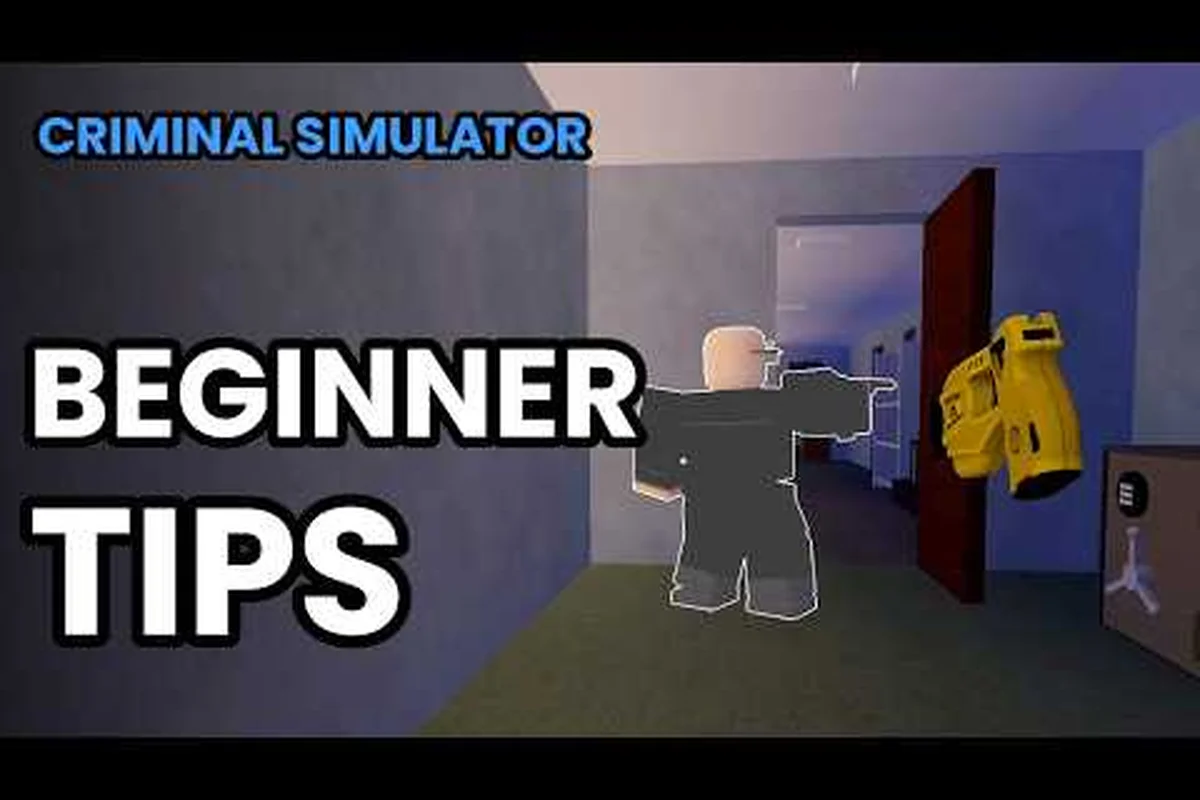
Criminal simulator roles in a crew matter because clear assignments help friends loot faster, spot danger earlier, and escape with more profit. For example, a crew can designate one player to scout residents and police while another watches for K9 dogs, then split looting tasks so nobody duplicates work. In a four-player server, pairing roles also lets one teammate guard the exit during a police chase; however, with fewer players, combining lookout and looting duties may be necessary to preserve the sale deadline. These four jobs turn a group of players into a coordinated night-heist team.
The official Criminal Simulator game page describes an alpha Roblox experience built around night robberies, sneaking past residents, fleeing police and K9 dogs, and selling loot before a deadline. Supports for one to four players make role assignment practical, while community players have also discussed the title through its Criminal Simulator guide by Blueburry. The roles below work as a simple operating system for every crew size.
What Makes Criminal Simulator Crew Roles Work?
A useful role system does more than label players. Each job has a clear responsibility, a point where the player acts, and a signal that tells the rest of the crew what happens next. This prevents everyone from looting the same cabinet, sprinting into the same sightline, or waiting until a police car is already close.
The official game page describes crews of one to four players, so a four-role template fits a full squad but should be compressed for smaller groups. The scout can handle entry, the looter can collect valuables, and the lookout can support both tasks while the escape planner protects the exit.
| Crew size | Recommended assignments | Main benefit |
|---|---|---|
| Solo | Entry, loot, lookout, and escape combined | Keeps every phase under personal control |
| Duo | Entry and loot combined; lookout and escape combined | Splits collection from threat awareness |
| Trio | Entry and loot; lookout; escape | Balances speed, observation, and extraction |
| Four players | Entry, loot, lookout, escape | Maximum specialization without idle players |
Primary Duties and Handoff Points
The entry specialist finds a practical opening and checks the route beyond the initial door. The loot specialist converts that access into valuables without delaying the crew. The lookout watches sightlines, listens for warnings, and signals whether the group should continue, freeze, or redirect.
The escape specialist owns the departure plan. That does not mean one person carries the bag alone; it means the player knows the intended route, detects when the window is closing, and prevents the crew from making incompatible decisions. In every assignment, the player should have one immediate action rather than a vague label.
Pre-Run Briefing
Hold a short briefing before entering. The crew should identify the target building, agree on the exit, choose a collection limit, and name emergency signals. A compact plan is more valuable than a long speech because the night’s opportunities can change quickly.
-
Choose a Primary Target and one acceptable alternative.
-
Name a Fallback Exit before anyone carries valuables outside.
-
Set a Loot Cap so collection does not create unnecessary risk.
-
Use simple Stop, Move, Retreat calls that remain clear during a chase.
-
Assign Backup Duties so one missing player does not collapse the plan.
Good communication also supports criminal simulator helping friends because beginners can contribute confidently when their task is specific. For broader setup options, the guide to playing Criminal Simulator with friends explains how party size can change crew structure.
Four Core Roles for a Four-Player Heist
A four-player crew works best when the roles connect in sequence: entry creates access, loot turns access into profit, lookout protects the timeline, and escape closes the run. No role should depend on another player doing the same task automatically.
Entry Specialist
The entry specialist makes the first move. Their job is to identify an opening, avoid obvious danger, and mark a clear path for the rest of the crew. They should not keep searching for a flawless entrance after the crew has already entered, because hesitation creates uncertainty.
| Entry priority | Action | Why it matters |
|---|---|---|
| Route confirmation | Check the route beyond the entrance | Prevents the crew from entering a trapped space |
| Visibility check | Note residents, cameras, and open sightlines | Reduces early detection |
| Communication | Mark safe and dangerous directions | Speeds up movement for less experienced players |
| Pace control | Move at a consistent speed | Keeps the team from separating |
The entry specialist should also carry a fallback plan. If the preferred opening is blocked, they need to choose between waiting, using another entrance, or abandoning that target. Deciding during the escape wastes time and makes the crew react to pressure instead of controlling it.
Loot Specialist
The loot specialist turns a valid entry into sellable loot. Their priority should be value and time, not collecting every visible object. Because the official page highlights selling before the deadline, a bag that can be sold in time is more valuable than a bag that creates a long chase.
A practical looting order starts with nearby valuables, moves to higher-value pieces only when the route is secure, and stops before capacity or risk becomes a problem. The player should communicate when the bag is full and when a better item is visible but not worth detouring for.
The Watchkeeping Role
The lookout protects the crew’s information flow while entry and loot specialists focus on doors, containers, and movement. They track visual threats—such as police vehicles, residents, or another crew’s approach—and listen for warning cues that may reveal a patrol nearby. A useful example is marking a side exit as blocked while the entry specialist changes the breach route, preventing the whole crew from committing to the wrong target. Checking whether the exit remains clear also gives the team time to react before extraction begins.
A strong lookout does not constantly shout uncertain information. They use specific observations, such as identifying a police direction, naming a resident, or warning that the original exit is blocked. That reduces confusion because the crew receives actionable information rather than general alarm.
Escape Planner
The escape planner thinks about the final thirty seconds of the run. They compare the current position with the exit, identify whether the crew has enough time, and decide between continuing to loot or leaving immediately. Their planning should include cover, direction changes, and a second route when the first becomes unsafe.
| Situation | Escape specialist’s decision |
|---|---|
| No detection, strong loot | Confirm the direct route and leave on schedule |
| Suspicion but no pursuit | Pause at cover, verify direction, then move |
| Active police chase | Commit to the safest viable route without stopping |
| Exit blocked | Redirect immediately to the fallback route |
| Crew separated | Hold the exit, signal once, and avoid drawing attention |
These roles improve criminal simulator crew building because each assignment feeds one shared escape plan: the escape planner calls the route, while a driver handles vehicle positioning and armed teammates cover looting and entry. For example, after the crew secures high-value loot but raises police suspicion, the driver can relocate the getaway vehicle without triggering an active chase, giving the escape planner time to switch from the direct route to the fallback. Community reporting favors flexible role swaps over rigid scripts because detection, crew separation, and blocked exits can change the best assignment at any moment.
Adapting Roles for Duos, Trios, and Public Servers
Full specialization is not always possible. A duo or trio must combine jobs without creating gaps. The key is to decide which combined role carries the greatest risk. Looking ahead usually belongs with the player who can see farther down the route, while exit planning belongs with the player making the final movement decisions.
Duo Crew
In a duo, one player can handle entry and loot while the other handles lookout and escape. The first player should follow a short confirmed route and avoid searching for optional valuables. The second player watches the crew’s back, calls threats, and makes the departure decision.
This arrangement works well because two-player crews already face a simpler communication problem. It also prevents both players from becoming focused on loot and missing the police approach that can end the run. The Criminal Simulator multiplayer night-heist guide offers additional ways to organize duo and group runs.
Trio Crew
For three players, divide the work into entry, loot, and protection. One player may handle entry plus loot when the target is simple, but the third player should remain unoccupied with containers and focus on residents, police, dogs, and exit conditions.
A useful trio rule is that the lookout retains final authority over movement once danger appears. Entry and loot specialists can continue collecting only while the lookout confirms that the route remains viable. This avoids two players interpreting a warning differently while the third waits for permission.
Playing With Strangers
Criminal simulator playing with strangers requires tighter signals because trust cannot be assumed. Start with one simple rule: the lookout’s stop warning overrides a loot request. This gives every player a reason to listen, even when they have only just joined the server.
| Group setting | Main risk | Best adjustment |
|---|---|---|
| Trusted friends | Overconfidence | Add a loot cap and fixed exit |
| New friends | Unclear callouts | Establish simple stop and retreat signals |
| Public server | Unequal experience | Keep the route short and assign lookout carefully |
| Mixed skill levels | Group separation | Use a walk-pace entry and central regroup point |
Public-server play makes server moderation and communication quality more important because every lookout warning, crew role callout, and escape-plan confirmation must be understood by strangers without voice chat. Criminal simulator server play can still work when everyone follows the same objective, but random teams can be less coordinated than a prepared group; for example, a lookout who spots a guard should call a stop warning before anyone requests loot, preventing the crew from entering a locked building and forcing an unplanned retreat. Keep routes short, assign lookout duties carefully, and use the table’s central regroup point when players separate.
Entry, Loot, and Lookout Timing
Good role timing prevents the crew from wasting its opening. The entry phase should be decisive, the loot phase should have a value-based limit, and the lookout should react to changes in the environment. A role becomes useful when it helps the crew make a better decision under a deadline.
The First Sixty Seconds
During the first minute, prioritize route knowledge over maximum loot. The entry specialist confirms the approach, the lookout checks immediate sightlines, and the loot specialist waits until the route appears stable. Once inside, the crew should establish a collection order rather than scatter into separate rooms.
-
Spend the opening on Route Confirmation, not distant valuables.
-
Keep the first collection route simple and easy to retrace.
-
Mark the planned departure point before the crew becomes distracted.
-
Stop looting if the lookout loses visual contact with the route.
Mid-Run Adjustments
The middle of a run is where role discipline matters most, especially when loot still looks productive but the escape planner is tracking the remaining clock as a shared resource. For example, one extra cabinet may fill the loot specialist’s bag and create a later bottleneck at the fallback route, where every crew member must move quickly and avoid stopping for another pickup. This is particularly important in criminal simulator server play and when playing with strangers: a clear cutoff prevents one player’s late detour from disrupting the crew’s exit timing.
| Signal | Meaning | Required response |
|---|---|---|
| One short stop call | Something needs attention | Entry and loot pause |
| Two repeated stop calls | Crew should gather | Regroup at the last safe point |
| Direction call | Threat or landmark noted | Route bends away from danger |
| Exit-ready call | Bag should be finalized | Loot specialist stops collecting |
| Retreat call | Run must end now | Everyone uses the fallback route |
This structure reduces disputes over whether the crew should take another item. A schedule-based cutoff is often better than a vague promise to leave when ready: the escape planner can announce a final collection window, the loot specialist can fill remaining bag space, and the entry point can confirm that everyone is ready before the fallback route becomes active. For example, if the crew has 20 seconds before the planned exit, a short cabinet stop should not extend that window; two repeated stop calls can trigger a regroup at the last safe point instead. In criminal simulator server play, this gives criminal simulator helping friends and strangers the same role discipline, while preserving criminal simulator crew building across cross-platform sessions.
The Final Approach
During the final approach, the lookout should watch behind and beside the group while the escape planner evaluates the route ahead. The loot specialist protects the bag and avoids unnecessary sprinting that could draw attention. The entry specialist can support by spotting alternate paths or doors.
A crew that succeeds in reaching the exit is not automatically safe. Police, dogs, residents, and the deadline can still end the run, so the escape role must remain active until the sale. The official page identifies all these pressure systems as central elements of the experience.
Police, Dogs, and Role Handoffs
Roles become most valuable when danger changes. During ordinary looting, the lookout may control timing by watching for police cars, guards, or suspicious movement and calling out opportunities to grab higher-value loot. Once police appear, the escape planner should assume command because movement now matters more than another item: blocking a pursuing squad, choosing a safe route, and using a getaway vehicle can turn a failed raid into a clean crew escape.
Responding to Police
When police are identified, the lookout should give a direction, and the escape planner should choose the route. Looting stops unless the crew has an obvious, immediate escape from the new position. The entry specialist can check a side route or doorway, but should not continue the original entry plan.
| Danger stage | Entry role | Loot role | Lookout role | Escape role |
|---|---|---|---|---|
| Suspicion | Hold position | Stop collecting | Track source | Confirm alternate route |
| Pursuit | Find usable cover or turn | Carry and protect loot | Call direction changes | Select route |
| Close pursuit | Avoid splitting off | Do not return for loot | Watch dogs and rear threat | Lead the crew out |
Handling K9 Pressure
Dogs make a straight sprint less reliable because they can follow a scent trail and close distance unexpectedly. The escape planner should favor corners, barriers, route changes, and areas where the dog’s path is less direct. The lookout should call whether the dog remains behind, matches the route, or gains ground.
Players should avoid relying on one player’s gear to solve every chase. This is where role handoffs preserve control: the lookout reports the pursuit, the escape planner changes direction, the loot specialist keeps the bag secure, and the entry specialist finds openings.
Recovering from Separation
Separation often begins when one player follows a different route. The first rule is to establish a safe reunion point rather than chase immediately. The escape planner can hold near the agreed exit while the entry specialist searches only along the original route.
For extra guidance on stealth and pursuit response, the Criminal Simulator police guide explains how crew coordination can improve when every player understands the threat pattern. For example, the entry specialist can pause at corners while the escape planner watches the rear approach, preventing a police pursuit from forcing the crew into a narrow route. Clear role calls also help Criminal Simulator players distinguish a routine patrol from an active search, which is especially useful when playing with friends or strangers on a public server.
Building a Repeatable Crew Plan
A successful run should become a repeatable procedure rather than a memory of one lucky heist. The crew can record what worked, identify where roles failed, and make small adjustments. This is especially useful for criminal simulator helping friends because experienced players can create a reliable structure without taking control away from newer teammates.
First Run: Keep It Simple
Start with a loot specialist, one entry route, and one planned exit: the specialist marks a single target and handles the primary duty of collecting its bounty, while the lookout covers the emergency responsibility of spotting pursuit. For example, a crew can enter through a rear alley, secure one marked package, and retreat through the safehouse corridor before a chase escalates. Keep the collection cap low—ideally one target or a small, pre-agreed haul—so the crew can leave together rather than splitting up during a high-heat pursuit.
After the run, review only three questions: Did the entry lead to a safe route? Did the loot specialist stop on time? Did the lookout provide usable warnings? These questions reveal whether the crew needs better communication or simply a different target.
Second Run: Add Accountability
In the next run, assign one measurable checkpoint. The loot specialist reports the remaining collection window, the lookout confirms the exit before the crew leaves the main room, and the escape planner calls the final departure. Record delays rather than blame, since a late departure may reflect an unrealistic loot target rather than poor effort.
Later Runs: Scale the Plan
As trust grows, the crew can support criminal simulator cross platform sessions, provided every participant can communicate clearly. Mobile players may benefit from written pings or shorter verbal calls, while controller players can use quick wheel-based signals. Device capability should influence the route, not determine a player’s value.
Building With New Friends
For criminal simulator inviting friends, send a short preparation message before the session. Include the target plan, the role each person should expect, the communication style, and whether the crew prefers a relaxed or fast run. This reduces the uncertainty that can make a first session feel chaotic.
A useful invitation message is: “Four-player crew: entry, loot, lookout, and escape. We use three callouts, keep loot capped, and regroup at the exit. Start with one target, then adjust after the run.” It explains the plan without requiring a long tutorial.
Communication Across Platforms
Cross-platform communication can work well when the crew reduces each signal to a small shared vocabulary. Instead of full sentences during danger, use distinct calls for stop, direction, regroup, and exit. Ordinary conversation can remain more relaxed when no threat is present.
| Signal | Voice example | Written fallback |
|---|---|---|
| Stop | “Hold” | !hold |
| Move left | “Left route” | !left |
| Move right | “Right route” | !right |
| Regroup | “Back to entry” | !regroup |
| Leave now | “Exit now” | !exit |
For device-specific party advice, the guide on playing Criminal Simulator on mobile covers communication with a smaller screen and the value of simple controls. On a phone, crew roles should be assigned around who can quickly read the HUD and issue route calls: for example, the lookout can announce visible guards while the driver focuses on turns and speed. If someone joins a Criminal Simulator server from mobile, keep the crew’s shared vocabulary to short cues such as !hold, !left, !right, !regroup, and !exit, rather than expecting full voice chat.
Frequently Asked Questions
What are the best Criminal Simulator roles for a crew?
The strongest setup assigns entry, loot, lookout, and escape to four players. Each role should have a distinct objective: secure the route, collect valuable loot, monitor threats, and manage departure. In smaller crews, combine roles while keeping observation and exit planning covered by someone focused on the surrounding area.
How do I help friends learn their crew roles?
Show each friend one action before the run: where to enter, which valuables to prioritize, where to watch for danger, and which exit to use. Demonstrate the stop call and rehearse the fallback exit. Clear responsibilities help new players contribute without constant instructions during a tense chase.
Can Criminal Simulator cross-platform play support a full crew?
Cross-platform sessions can work if communication remains simple and every participant agrees on the plan. Use identical calls such as stop, regroup, and exit, and avoid relying on platform-specific shortcuts. Players should also account for different screen sizes by choosing short routes and avoiding split-second instructions.
Is a lookout necessary when playing with strangers?
Yes, especially when playing with strangers because the lookout protects the group from unexpected residents, police, and dogs. The role does not require guessing every danger; reporting confirmed direction and calling a stop when conditions change already provides value. Even experienced players can miss a route change while focused on loot.
How should a crew handle a failed first run?
Review the break in the chain instead of immediately repeating the same route. Determine whether the failure came from detection, an overlooked exit, too much loot, or unclear communication. Assign corrections to the appropriate player, choose a simpler target, and rehearse the new departure plan before the next attempt.
Clear criminal simulator roles in a crew turn individual actions into a dependable heist. Entry secures access, loot converts opportunity into profit, lookout protects the route, and escape preserves the run. By keeping each job focused, rehearsing simple calls, and adjusting the plan after each night, friends and strangers alike can build a crew that works better under pressure.